IICRC S500 ALIGNED
When the water hits, your drying plan can’t be a phone tree.
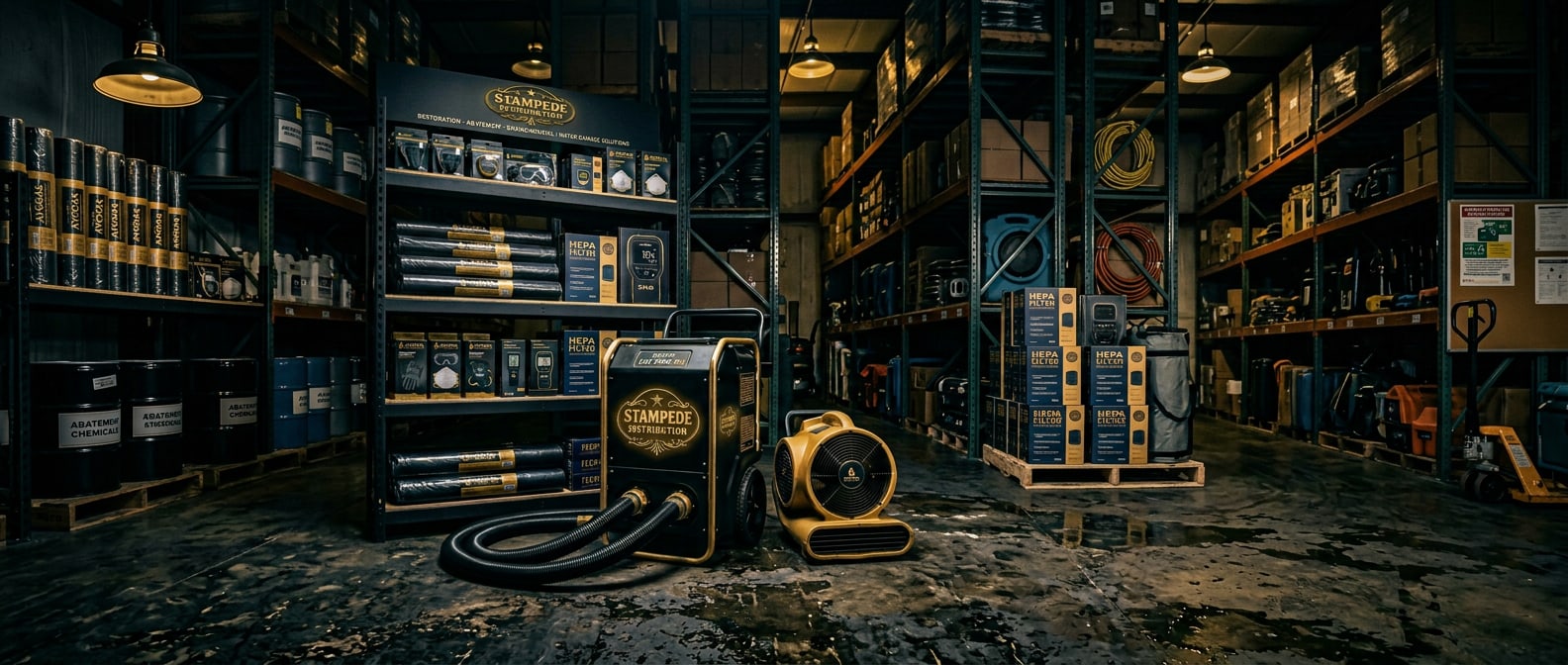
We stock LGR dehumidifiers, axial and centrifugal air movers, truck-mount and portable extractors, moisture meters, and thermal imagers in Grand Prairie, ready for same-day pickup when a Cat 3 loss is on the board.
Water-damage restoration lives and dies in the first 48 hours. The ANSI/IICRC S500-2021 Standard for Professional Water Damage Restoration is explicit: establish a drying goal, deploy adequate dehumidification and airflow capacity, and monitor moisture until target equilibrium is reached. Miss the window and a Category 1 clean-water loss becomes a Category 3 biohazard, with mold amplification risk rising sharply after roughly 48–72 hours of sustained elevated moisture, per the EPA’s Mold Remediation in Schools and Commercial Buildings guidance.
The margin killer on most water jobs isn’t labor, it’s equipment capacity on day one. A crew that arrives with three air movers short and half the dehu grains-per-pound they modeled gets a second trip, a Cat escalation, and a conversation with the adjuster they didn’t want to have. That is a distribution problem, not a crew problem. Stampede stocks Phoenix Therma-Stor LGRs (including HEPA-rated HydroX and DryMAX variants), Legend Brands DriForce and DriEaz air movers, KleenRite flood extractors, Tramex and protimeter moisture meters, and FLIR thermal imagers deep enough that DFW crews can rebalance mid-job without waiting on a manufacturer ship date.
Stampede is a distributor, not a restoration contractor. We don’t compete with your crew on the jobsite, we make sure the gear is on your truck when the call comes in. Same-day pickup at our Grand Prairie warehouse, direct manufacturer relationships with Phoenix, Legend Brands, KleenRite, and Tramex, and a 24/7 CAT response line at 214.235.0721 for regional catastrophic events (freeze-line breaks, hail-driven roof losses, municipal main failures).
What we stock
LGR & Desiccant Dehumidifiers
Low-grain-refrigerant units for residential and light commercial, desiccant rigs for cold-climate and deep-dry commercial work, sized by grains-per-pound removal, not marketing claims.
Axial & Centrifugal Air Movers
Axials for open-plan surface drying, centrifugals for directed high-velocity airflow under cabinetry and into wall cavities, stackable for transport efficiency.
Flood Extractors & Wands
Truck-mount and portable extractors with weighted wands for direct-contact extraction, the single biggest lever for cutting dry times on Category 1 and 2 losses.
Moisture Meters & Thermal Imagers
Pinless and pin-type meters, hygrometers, and FLIR thermal imagers for locating hidden moisture in assemblies, the S500 documentation trail starts here.



Common questions
What water-damage equipment do I actually need on a Cat 2 loss?
At minimum: enough air movers for one per 50–60 sq ft of affected surface area, one LGR dehumidifier per roughly 1,000–1,500 sq ft of unlined wet area (adjust for ceiling height and load), a truck-mount or portable extractor for direct-contact water removal, and moisture meters with documentation-grade logging. Category 2 also requires an EPA-registered antimicrobial appropriate to the source water. The S500 standard frames it as a capacity calculation, not a per-job equipment list.
How fast can Stampede get equipment on a truck?
Same-day will-call pickup from our Grand Prairie warehouse during business hours for in-stock items, and 24/7 CAT response at 214.235.0721 for regional catastrophic events. Most of our top-moving Phoenix, Legend Brands, and KleenRite SKUs are stocked deep enough that a single contractor running a 20-unit loss won't clear the shelf.
Do you sell to single-truck operators or just large firms?
Both. A solo IICRC-certified water damage restoration technician opening net terms gets the same rep, the same pricing tiers once volume is established, and the same 24/7 CAT line as a 40-truck franchise. We don't gate access behind minimums that lock out new market entrants.
What's the difference between LGR and desiccant dehumidification?
LGR (low-grain refrigerant) units are the workhorse for typical residential and light commercial water losses at ambient temperatures in the 70–90°F range. Desiccant dehumidifiers use a rotary silica wheel and produce dry air at much lower grain loadings, the right tool for cold assemblies, commercial large-volume spaces, and cases where the drying chamber can't be brought to LGR-favorable temperatures. Stampede stocks both; your rep will help size by job.
Do you carry consumables and chemicals for water losses, or just equipment?
Both. Extraction wands, filter bags, hoses, poly sheeting for containment, and EPA-registered antimicrobials and disinfectants from Bioesque and ICP Group's Benefect and Fiberlock lines. A water loss with a containment failure or a missing antimicrobial turns into a mold job, we stock the boring SKUs that prevent that.
FIELD REPORTS
From this vertical
Water Damage
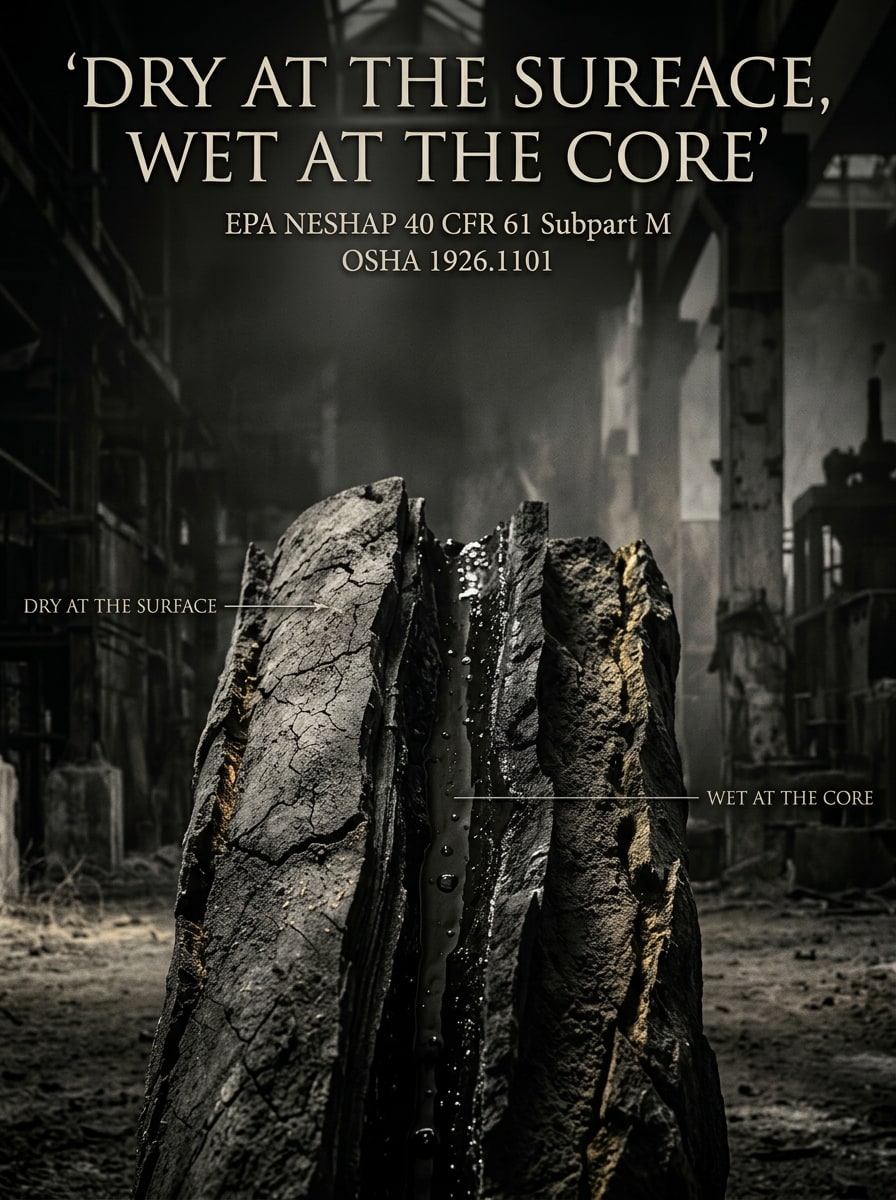
Dry at the Surface, Wet at the Core: The Class 4 Loss Your Meter Signed Off Too Early
IICRC S500 Class 4 is bound water in hardwood, plaster, and concrete. A surface reading closes the job while the core of the assembly is still soaked.
Water Damage
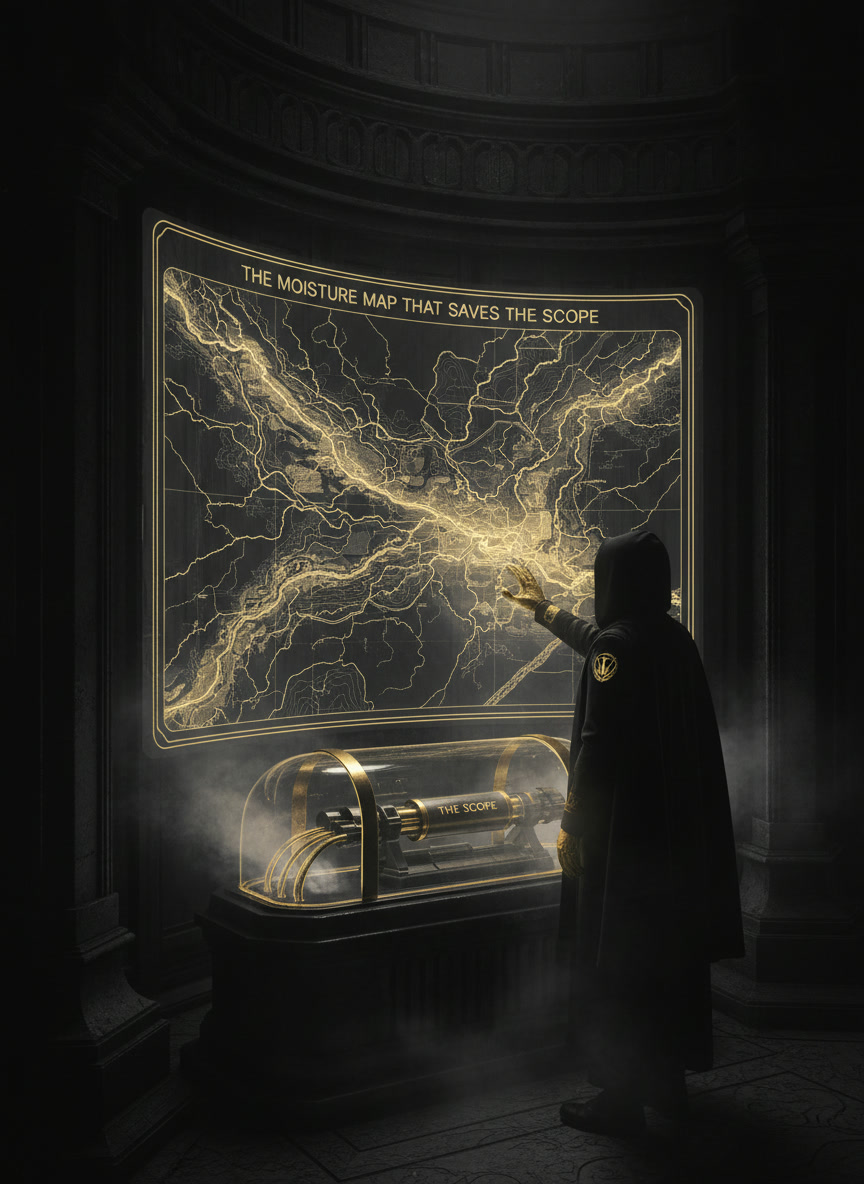
The Moisture Map That Saves the Scope
A drying log tells you what happened. A moisture map tells you what to do next, what to remove, and what the carrier can defend.
Water Damage
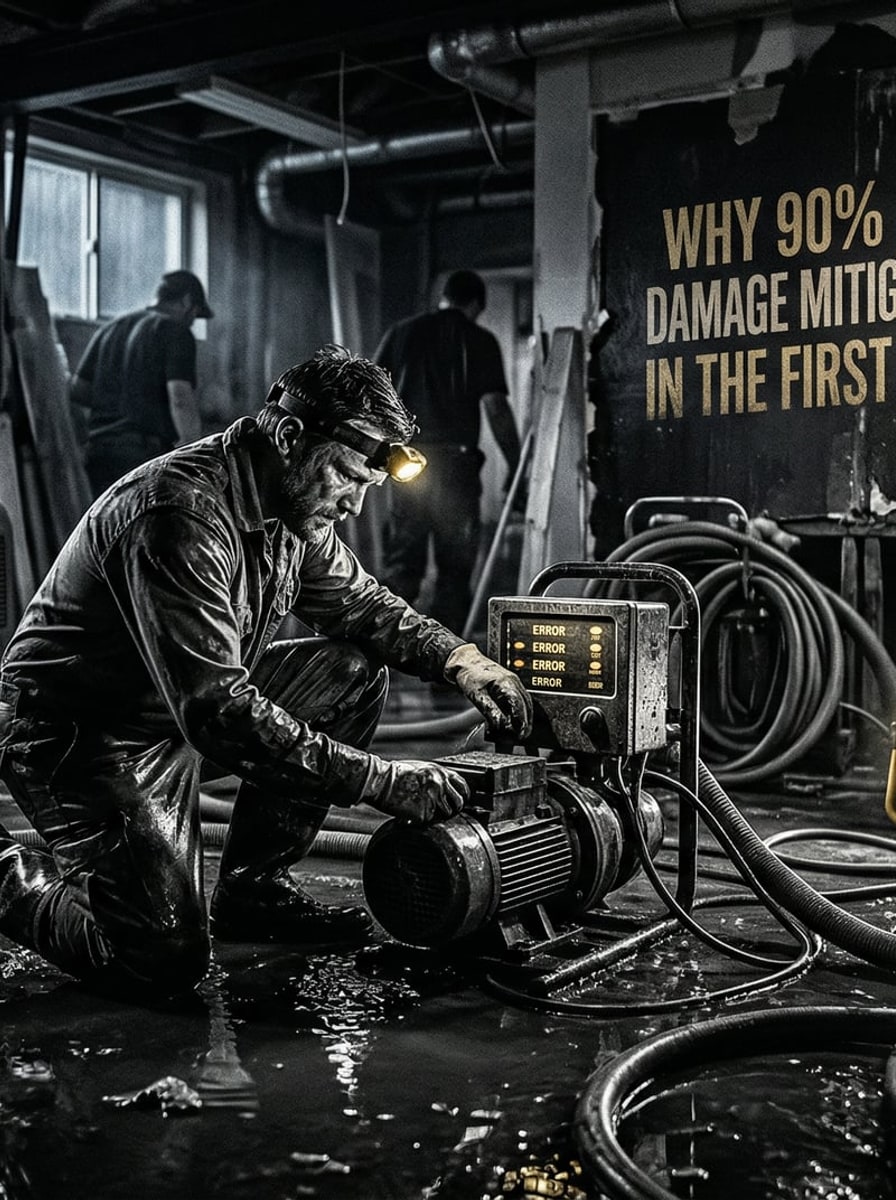
Why Most Water Damage Mitigation Fails in the First 48 Hours
IICRC S500 gives you a window. Most crews lose it before the truck leaves the shop.
You might also need
Restoration
Mold Remediation
Negative-air machines, zip-wall containment, HEPA vacuums, botanical and EPA-registered antimicrobials, encapsulants, and moisture verification gear for crews working to the IICRC S520 Condition 1 standard.
Restoration
Fire & Smoke Restoration
HEPA vacuums, negative-air machines, specialty deodorizers, thermal foggers, sealers and coatings, and respiratory protection, stocked for the DFW fire-loss crews who know that the fire is the easy part.