IICRC S700 ALIGNED
Smoke migrates. Your chemistry, PPE, and filtration need to catch up.
HEPA vacuums, negative-air machines, specialty deodorizers, thermal foggers, sealers and coatings, and respiratory protection, stocked for the DFW fire-loss crews who know that the fire is the easy part.
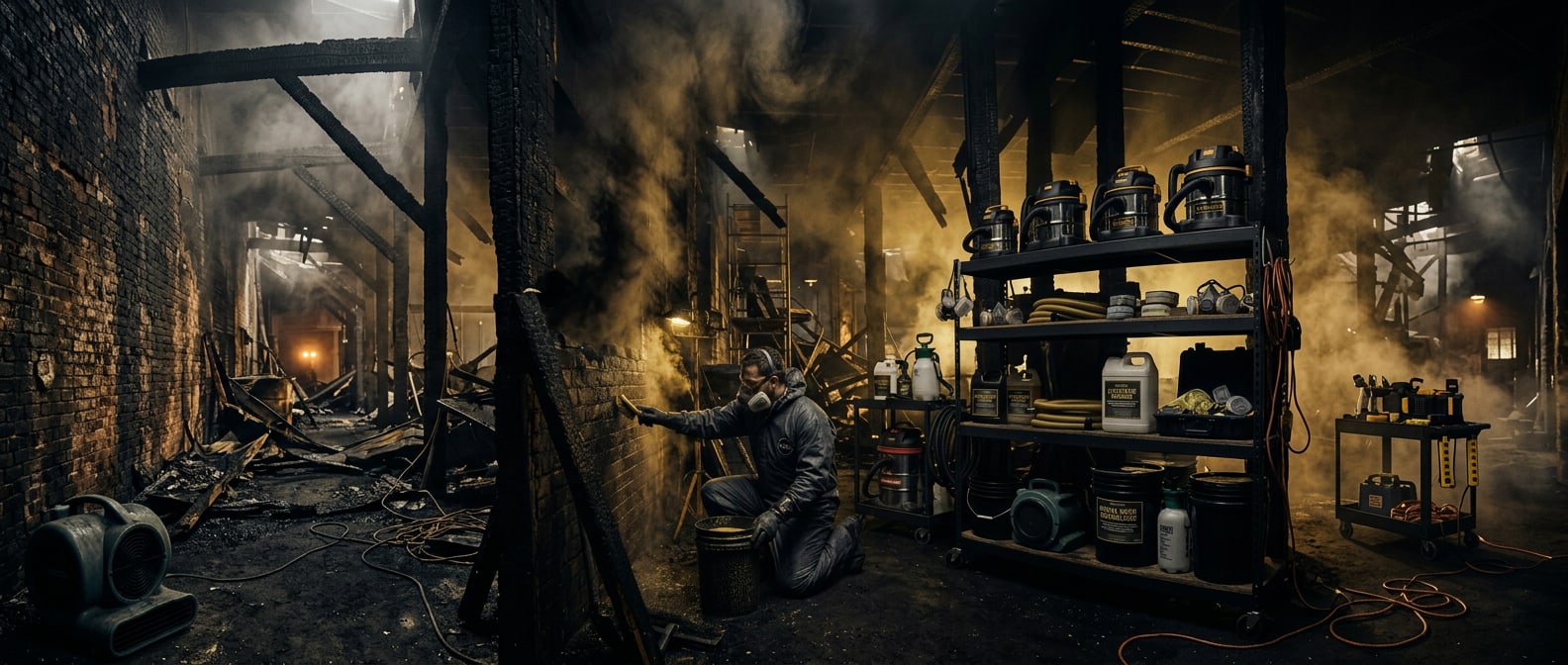
Fire and smoke restoration is a chemistry problem disguised as a cleaning problem. The IICRC S700 Standard for Professional Fire and Smoke Damage Restoration organizes the work around identifying the residue type, dry smoke, wet smoke, protein, synthetic, fuel oil, or fingerprint soot, and matching detergency, solvency, and pH to the substrate. Get the chemistry wrong and you set the staining deeper while wasting three days of tech time. Get it right and a structural clean takes a fraction of the labor.
The unglamorous truth about most fire-loss failures is that crews bring great extraction gear and the wrong air-handling stack. Smoke residues are sub-micron, most published residue characterizations put a significant fraction below 1 micron, which means they migrate through HVAC, settle on cold surfaces three rooms from the origin, and re-deposit every time negative pressure drops. HEPA filtration rated for 0.3 micron at 99.97% capture (true HEPA per DOE/IEST) is the minimum, not the aspiration. Sub-HEPA "HEPA-type" units fail the job and fail the occupant.
Stampede stocks NC Filtration negative-air machines and pre-filters, Mastercraft true-HEPA vacuums, HB Fuller/Foster fire-restoration sealers and encapsulants, ICP Group’s Fiberlock and Benefect antimicrobial and odor chemistries, Sentinel Products abatement-grade containment, Trimaco surface protection, and 3M respiratory protection (half-mask and full-face P100 and combination cartridges). Fire losses don’t wait on backorders, our Grand Prairie warehouse and direct manufacturer lines keep the stack available.
What we stock
HEPA Vacuums & Air Scrubbers
True-HEPA capture at 0.3 micron / 99.97%, for particulate cleanup, pre-cleaning before chemical work, and in-room filtration during active restoration.
Negative-Air Machines & Ducting
Portable negative-air units with HEPA final-stage filters, pre-filters for high-dust loads, and 8"/12"/16" layflat ducting to route exhaust out of the work zone.
Deodorizers, Sealers & Coatings
Oxidizing and non-oxidizing deodorizers, thermal fogging solutions, Foster fire-restoration sealers, and Fiberlock encapsulants for framing, decking, and HVAC components.
Respiratory Protection & Coveralls
Half-mask and full-face P100 respirators, organic-vapor combination cartridges for solvent-based cleaning, coveralls, and hearing and eye protection for structural soot work.



Common questions
What separates a true HEPA vacuum from a "HEPA-type" unit for fire work?
A true HEPA filter captures 99.97% of particles at 0.3 microns, tested to the DOE or IEST standard. "HEPA-type" and "HEPA-style" carry no performance guarantee and typically leak at the gasket and bypass at the motor. On a smoke job the leaking particulate is what re-deposits and causes the complaint call two weeks after you demobilize. Mastercraft and the commercial Phoenix units we carry are certified true HEPA.
How do I pick between thermal fogging and ULV fogging for odor work?
Thermal fogging vaporizes the deodorant and drives smaller particles deeper into porous substrates, it mimics the way smoke penetrated in the first place, which is why S700 highlights it for structural work. ULV (ultra-low-volume) fogging uses a larger droplet size and is appropriate for surface treatment and contents. Many jobs use both in sequence. Stampede stocks the equipment and the compatible deodorant chemistries.
What respiratory protection is required for a fire restoration tech?
OSHA 29 CFR 1910.134 requires a written respiratory protection program, medical evaluation, fit testing, and training any time respirators are required. For fire-residue work, a half-mask or full-face elastomeric respirator with P100 filters is the common specification; add organic-vapor cartridges when solvent-based cleaners or encapsulants are in use. Disposable N95s are not adequate for most structural fire work.
Do you stock the Foster 40-20 / Foster 40-50 fire-restoration sealers?
Yes, HB Fuller (Foster) is one of our core chemistry lines. We stock fire sealers, IAQ and duct coatings, and the compatible thinners and application kits. We can also cross-reference Fiberlock and Sentinel alternates if specification or lead time requires it.
FIELD REPORTS
From this vertical
Fire & Smoke
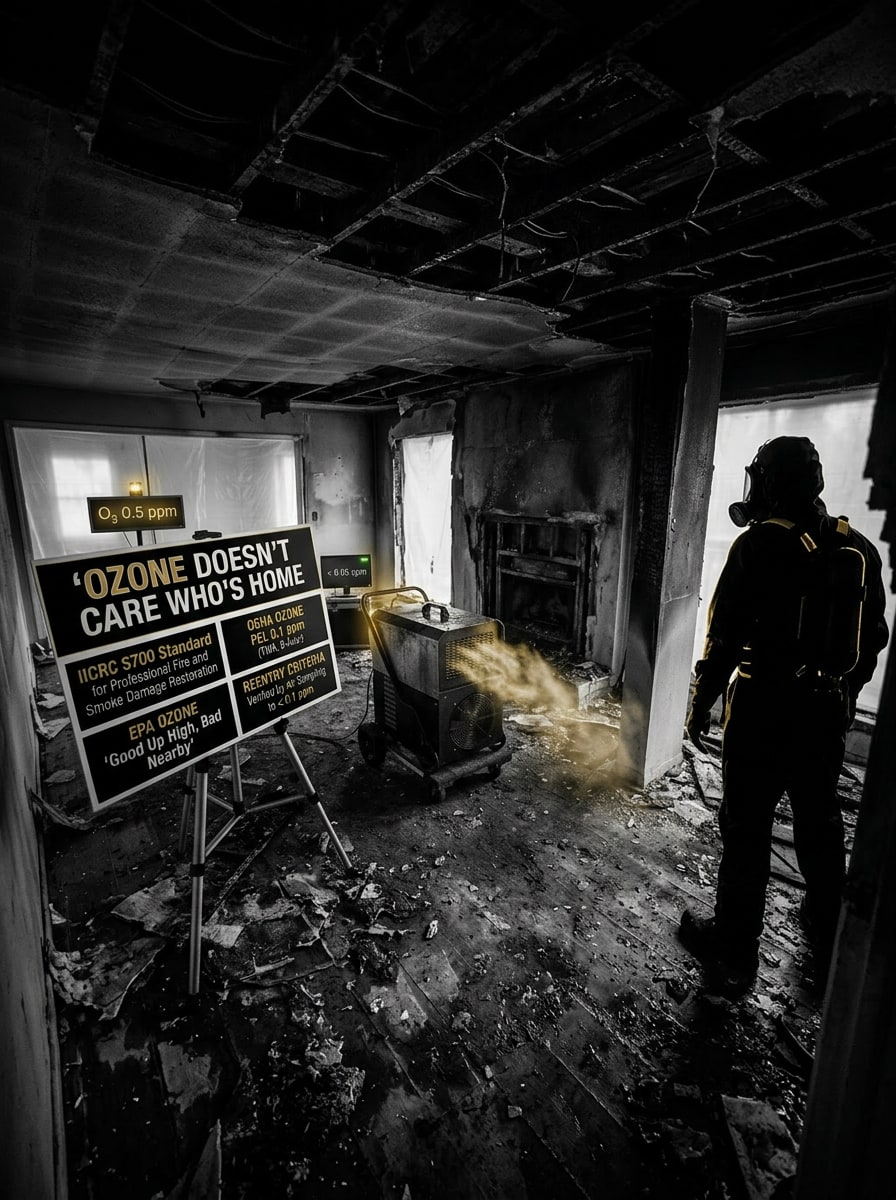
Ozone Doesn't Care Who's Home: The Deodorization Method That Becomes a Second Hazard
Ozone deodorizes only in an evacuated, sealed structure. Run it occupied and you have traded a smoke odor for an OSHA and EPA exposure problem.
Fire & Smoke
Why Fire Odor Comes Back After the Job Is "Done"
Smoke odor returns when residue reservoirs, pressure pathways, and HVAC deposits survive the first cleaning pass. Deodorization cannot replace source removal.
Fire & Smoke
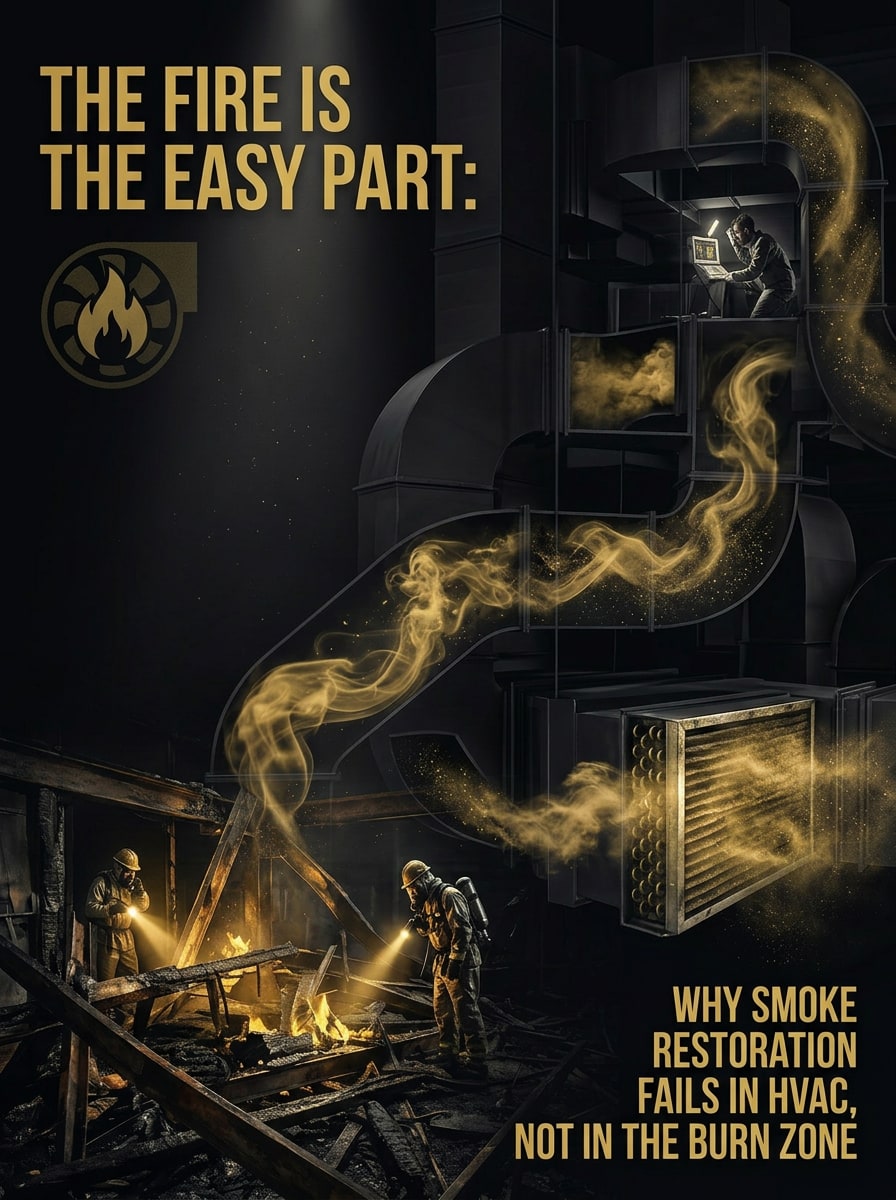
The Fire Is the Easy Part: Why Smoke Restoration Fails in HVAC, Not in the Burn Zone
IICRC S700 treats smoke as chemistry. Most crews treat it as cleaning. Sub-micron residue doesn’t care which one you picked.
You might also need
Restoration
Water Damage Restoration
We stock LGR dehumidifiers, axial and centrifugal air movers, truck-mount and portable extractors, moisture meters, and thermal imagers in Grand Prairie, ready for same-day pickup when a Cat 3 loss is on the board.
Restoration
Mold Remediation
Negative-air machines, zip-wall containment, HEPA vacuums, botanical and EPA-registered antimicrobials, encapsulants, and moisture verification gear for crews working to the IICRC S520 Condition 1 standard.