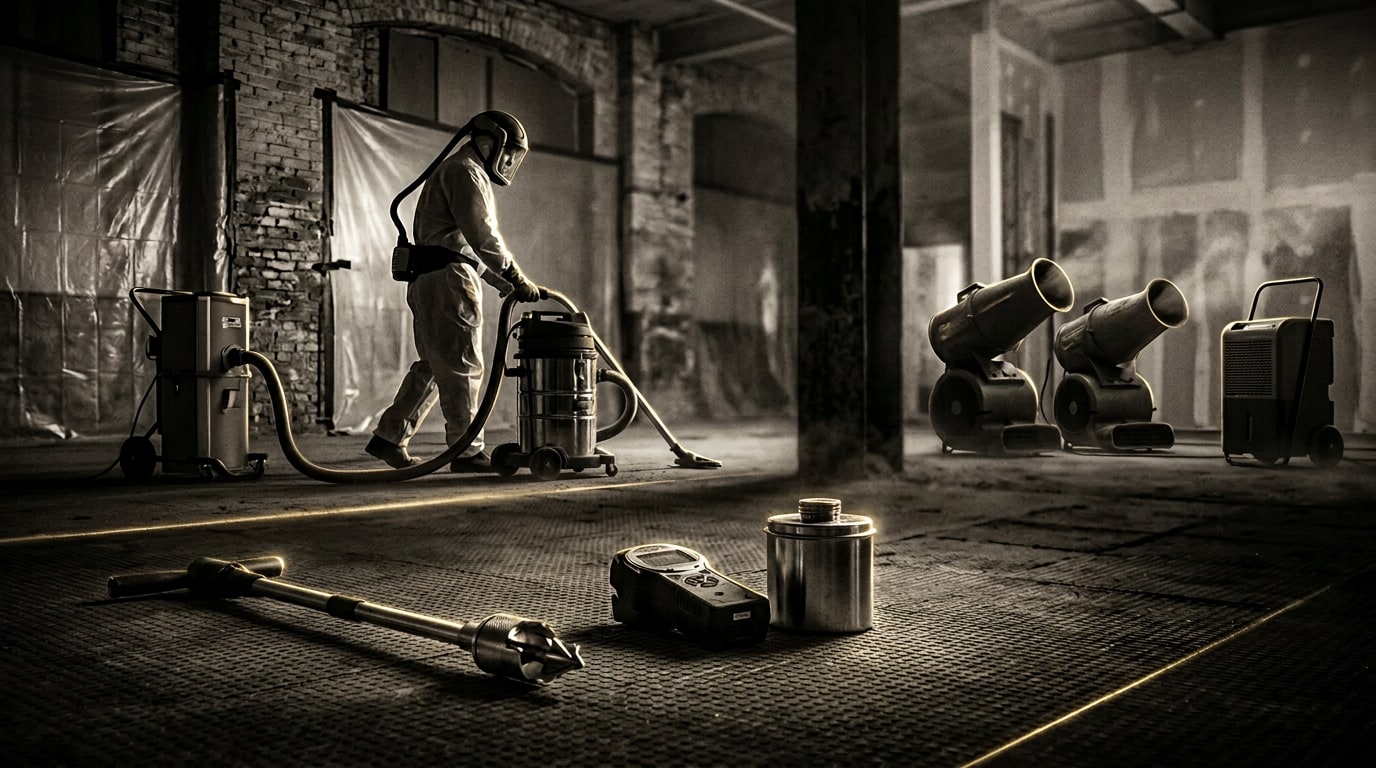
A restoration technician in a hooded suit and respirator vacuuming a stripped commercial interior under containment sheeting, with two air movers, a dehumidifier, an air scrubber, and a moisture meter staged on the floor.

Odor control

Hydroxyl vs Ozone

Should this odor job run hydroxyl or ozone?

The short answer

Ozone is the faster oxidizer and the more restrictive one: it is a respiratory irritant, so the space must be unoccupied, secured, and aired before reoccupation. Hydroxyl is generally used in occupied space, so work continues alongside it, but it treats more slowly. Neither substitutes for removing the source and cleaning.

Hydroxyl

UV-generated radicals. Generally used in occupied space, so deodorization runs alongside other trades.

Ozone

Strong oxidizer. Unoccupied, secured space only, with clearing and airing before anyone returns.

Hydroxyl compared with Ozone
CriterionHydroxylOzone
Occupancy during treatmentGenerally permittedUnoccupied only
Speed on heavy odorSlowerFaster
Schedule impactRuns with other tradesBlocks the area
Material compatibilityBroadly gentlerCan attack rubber and elastomers
Access controlStandard site practiceSignage and secured entry required
ReoccupationNo clearing periodAiring out required
Replaces cleaningNoNo

Which one this job needs

Hydroxyl

When hydroxyl is the right call

  • The building is occupied, or other trades need continuous access, and shutting the area down would cost more than the slower treatment.
  • Contents and finishes include rubber, elastomers, or sensitive materials where an aggressive oxidizer is a risk to the restorable items.
  • The odor load is moderate and the schedule can absorb a longer treatment window running in the background.
  • Site control is loose enough that guaranteeing an empty, secured space for the duration is not realistic.
Ozone

When ozone is the right call

  • The structure is genuinely vacant and can be secured, signed, and controlled for the whole treatment and the airing period after it.
  • The odor load is heavy and the schedule needs the speed that a strong oxidizer gives.
  • Materials at risk of oxidative damage have been removed or protected, and the contents inventory has been checked rather than assumed.
  • Someone owns clearing the space and verifying it is safe before reoccupation, as a named step rather than an afterthought.

What the standard actually says

S700 treats deodorization as the last stage of a sequence, not a shortcut through it: locate and remove the source, clean affected surfaces and contents, then treat residual odor and seal where required. Odor that returns after a job is usually evidence the source stage was incomplete, and no generator of either kind resolves that. EPA has separately cautioned against ozone use in occupied space.

Stampede is a distributor, not a restoration contractor. The restoration contractor makes the final determination.

We stock both sides

Browse the categories these choices come from, or send a list and a rep will price it. If a maker we carry builds something not published on this site, ask for it by part number: that is a publishing gap, not a supply gap.

Common questions

Can ozone be run while a building is occupied?

No. Ozone is a respiratory irritant and treatment is performed in unoccupied, secured space, with the area cleared and aired before anyone returns. That access-control requirement is the practical reason many jobs choose hydroxyl instead, even though ozone would treat the odor load faster.

Does either one remove the need to clean?

No. Both are residual-odor treatments applied after the source has been located and removed and affected surfaces and contents have been cleaned. S700 places deodorization at the end of that sequence. Odor that comes back weeks after a job usually means the source stage was cut short, not that the generator was undersized.

Why does fire odor return after the job looks finished?

Because smoke migrates into cavities, HVAC, and porous finishes that were never opened, and residual odor re-emerges as those surfaces warm and off-gas. The fix is scope, not runtime: find the paths the smoke actually took, clean or remove what it reached, then treat what is left.